How to Care for Nonstick Cookware and Extend Its Useful Life
Protect the coating with moderate heat, suitable utensils, and gentle cleaning.
Protect the coating with moderate heat, suitable utensils, and gentle cleaning. The best approach depends on the materials, products, and conditions in your home. Start with the instructions for the specific item you are working with and make a small compatibility check before proceeding.
Step-by-step approach
- Follow the pan maker’s heat limits
- Avoid prolonged empty preheating
- Use utensils approved for the coating
- Cool before washing as directed
- Store with protection between pans
Nonstick cookware is easier to maintain when the coating is protected from excessive heat, sharp utensils, and abrasive cleaning.
Follow the maker’s temperature and oven-use limits.
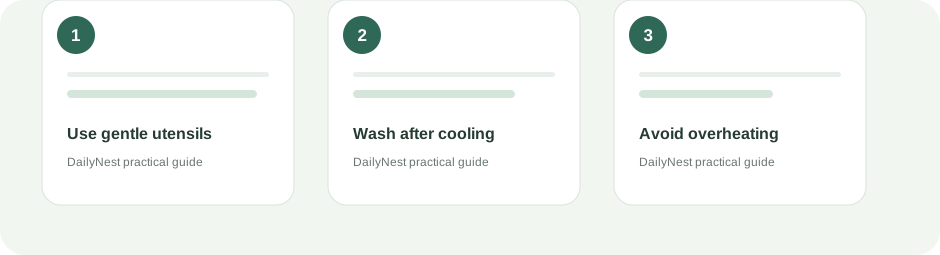
Use suitable wood, silicone, or heat-resistant utensils, and avoid cutting food in the pan.
Wash with warm water and mild dish soap after it cools, then dry before stacking with a soft protector between pans.
Do not overheat empty cookware. Avoid steel wool and harsh oven cleaners. Replace cookware if the coating is peeling or damaged in a way the manufacturer identifies as unsafe.
Protect the coating before it wears
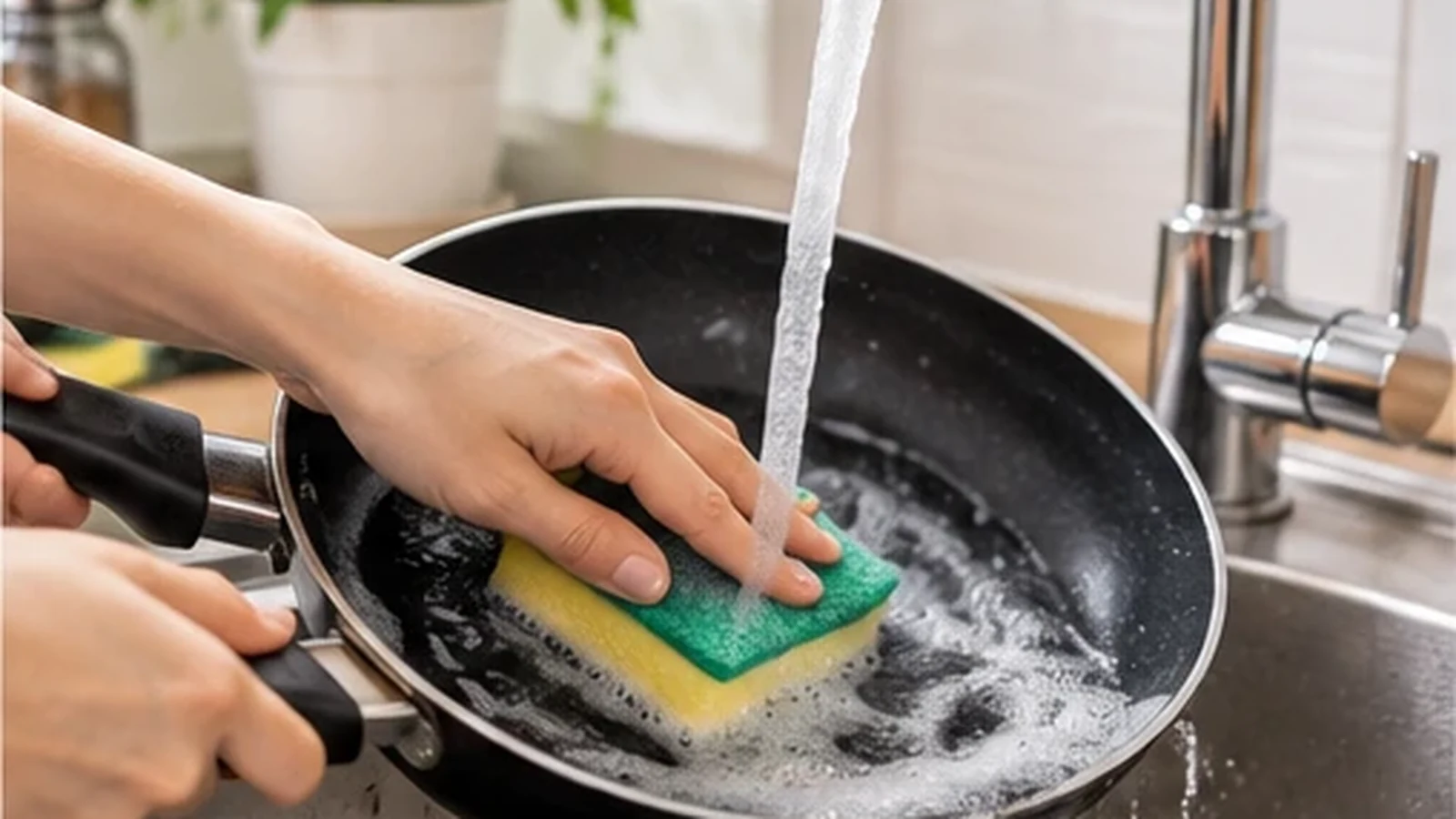
Let the pan cool before washing; sudden temperature changes can stress cookware and may cause warping. Use a soft sponge, mild dish soap, and warm water. For stuck-on food, soak the pan rather than scraping aggressively. Choose silicone, wood, or other utensils specifically permitted by the cookware maker.
Troubleshooting and common mistakes
Avoid stacking pans with bare metal surfaces touching. If stacking is necessary, place a pan protector or soft cloth between them. Use the heat setting and preheating method specified by the manufacturer; empty nonstick pans should not be left heating unattended.
When to stop and get help
Stop using cookware if the coating is peeling, flaking, or badly damaged. Do not assume every nonstick coating has identical temperature limits or care instructions. The product manual is the controlling source for your particular pan.
Choosing the right everyday routine
The safest cleaning routine is the one permitted by the exact cookware instructions. Check whether the handle, lid, and pan body have different care limits. If food begins sticking more often, first review heat level, preheating, and cleaning residue rather than immediately using a harsher scrubber.
Frequently asked question
Can I use metal utensils?
Only if the cookware manufacturer says the coating and product are designed for them. Many nonstick makers recommend softer utensils to reduce surface wear. Check the manual for your specific pan rather than relying on a general rule for all coatings.
Editorial note: This is general household information. Product instructions and official safety guidance take priority where they differ.