How to Keep a Cutting Board Clean and Reduce Lingering Odors
Combine prompt washing, food separation, and complete drying.
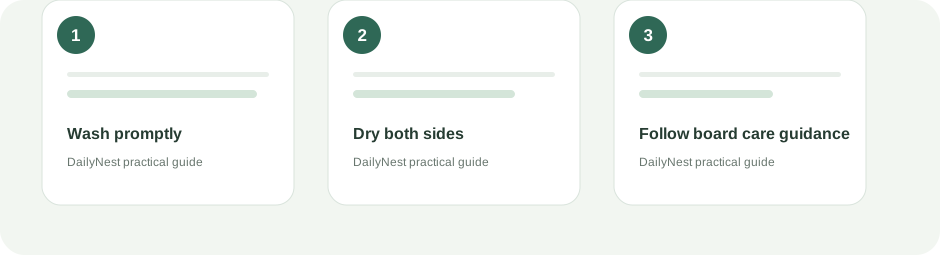
Combine prompt washing, food separation, and complete drying. The best approach depends on the materials, products, and conditions in your home. Start with the instructions for the specific item you are working with and make a small compatibility check before proceeding.
Step-by-step approach
- Identify the board material
- Wash promptly with hot soapy water
- Clean both sides and edges
- Sanitize when appropriate under local guidance
- Dry upright and inspect for deep grooves
Wood and plastic boards need slightly different care.
Wash promptly after use, including edges and both sides.
Use separate boards for raw animal products and ready-to-eat foods, or clean and sanitize between tasks according to food-safety guidance.
Let the board dry upright with airflow.
Wood may need a food-safe conditioner recommended by its maker; plastic boards with deep grooves may need replacing.
Do not soak wooden boards for long periods. Use only food-contact-safe sanitizers as directed. Replace cracked or deeply scored boards that cannot be cleaned effectively.
Clean according to the board material
After food preparation, scrape away residue and wash the board with hot soapy water. Follow the manufacturer’s instructions for wood, bamboo, plastic, or composite boards; these materials do not all tolerate the same treatment. Clean both sides and the edges, especially after raw meat, poultry, or seafood.
Troubleshooting and common mistakes
Rinse thoroughly and dry the board upright or on a rack so air can reach both sides. Replace boards with deep grooves, cracks, or surfaces that are difficult to clean. Keep separate boards for raw animal foods and ready-to-eat foods where practical, and sanitize only with a method approved for that board.
When to stop and get help
Do not leave a board soaking in a sink or store it while damp. Avoid applying household chemicals not labelled for food-contact surfaces. If a board has persistent odor or visible mold in cracks, replacement is safer than trying stronger cleaners.
Separate cleaning from sanitizing
Washing removes food residue; sanitizing is a separate step and should follow a method approved for the board material and food-contact use. Do not improvise chemical concentrations. Follow the product label and local food-safety guidance where sanitizing is needed.
Frequently asked question
Can I use bleach on a cutting board?
Only if the board manufacturer and the product label permit that use, including the concentration and food-contact directions. Do not improvise a mixture or combine bleach with other cleaners. Some board materials require a different care method.
Editorial note: This is general household information. Product instructions and official safety guidance take priority where they differ.