How to Care for Wooden Kitchen Utensils
Keep wooden spoons clean and dry and condition them only with food-safe products.
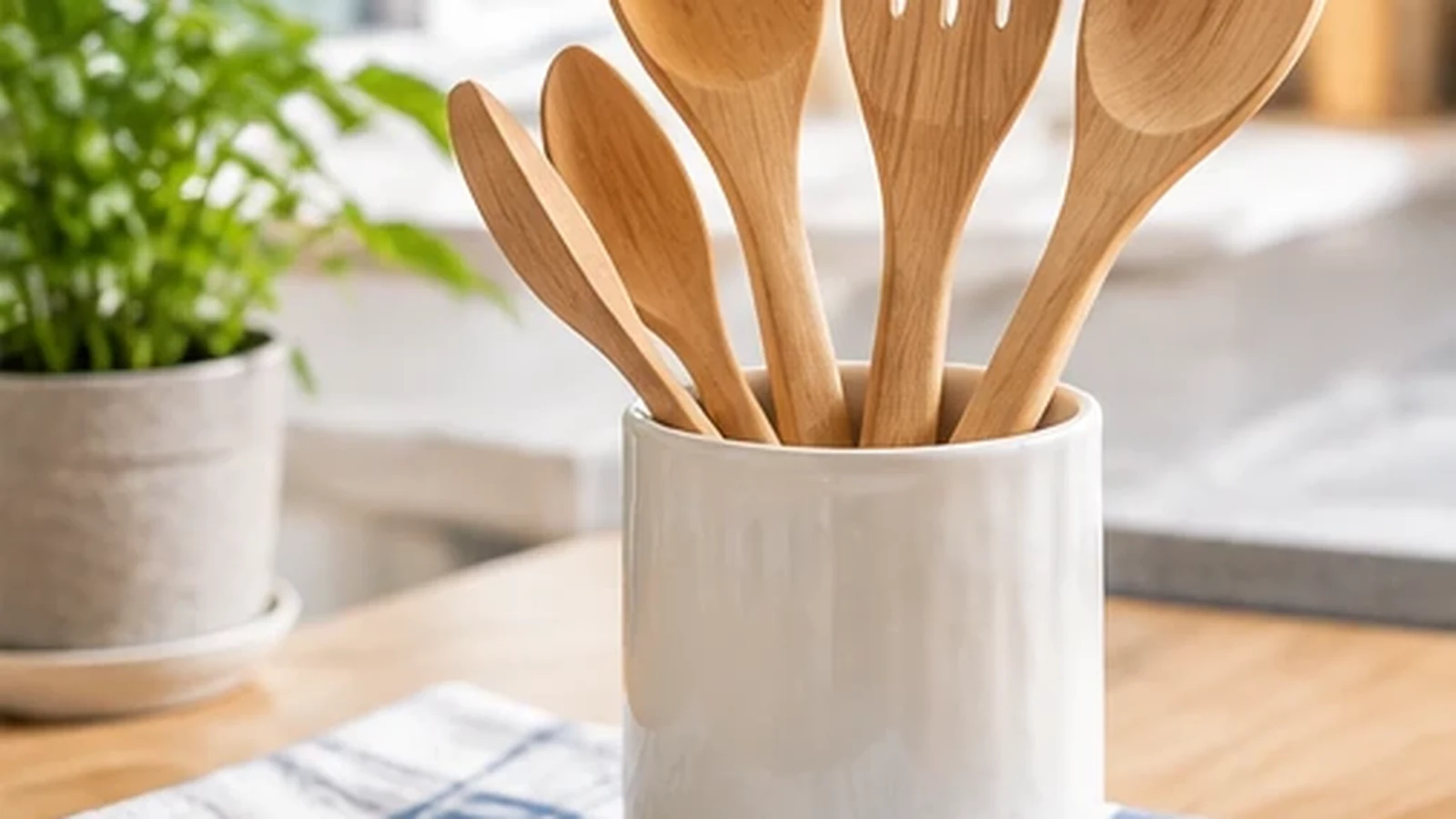

Keep wooden spoons clean and dry and condition them only with food-safe products. The best approach depends on the materials, products, and conditions in your home. Start with the instructions for the specific item you are working with and make a small compatibility check before proceeding.
Step-by-step approach
- Wash soon after use
- Avoid prolonged soaking
- Towel-dry and air-dry fully
- Condition only if the maker recommends it
- Replace cracked or splintered utensils
Wooden spoons and spatulas last longer when they are not left soaking in a sink.
Wash with warm water and dish soap, rinse, and allow airflow around the utensil until dry.
If the maker recommends conditioning, use a food-safe product such as a suitable mineral oil and follow its directions.
Do not use ordinary cooking oil that may become rancid.
Do not use utensils with deep cracks or splinters. Avoid dishwashers unless the maker permits them. Keep wooden tools away from direct flame.
Clean promptly and dry completely
Wash wooden spoons and spatulas by hand with warm water and dish soap soon after use. Clean the handle and the area where the head joins the handle, because food can collect in seams. Rinse without leaving the utensil submerged, then towel-dry and stand or lay it where air can circulate around all sides.
Troubleshooting and common mistakes
Avoid the dishwasher and prolonged soaking unless the maker explicitly says the item is dishwasher-safe. Repeated heat and water exposure can cause some wooden items to crack, roughen, or split. When the surface becomes rough, follow the maker’s care guidance rather than applying an arbitrary oil or finish.
When to stop and get help
Retire utensils with deep cracks, loose joints, persistent odors that remain after washing, or surfaces that cannot be cleaned properly. Never use a damaged utensil where food can lodge in inaccessible gaps.
What to inspect over time
Look closely at the utensil after it dries. A smooth, intact surface is easier to clean than one with splinters, open cracks, or a loose joint. Keep a damaged utensil out of food preparation until it has been repaired appropriately or replaced.
Frequently asked question
Can wooden spoons go in the dishwasher?
Do not assume they can. Heat, detergent, and long exposure to water may damage some wooden utensils. Follow the maker’s care instructions; hand-washing and thorough drying are the cautious default when no instructions are available.
Editorial note: This is general household information. Product instructions and official safety guidance take priority where they differ.