How to Organize Household Cleaning Supplies Safely
Make supplies easy to find while preventing accidental exposure or mixing.
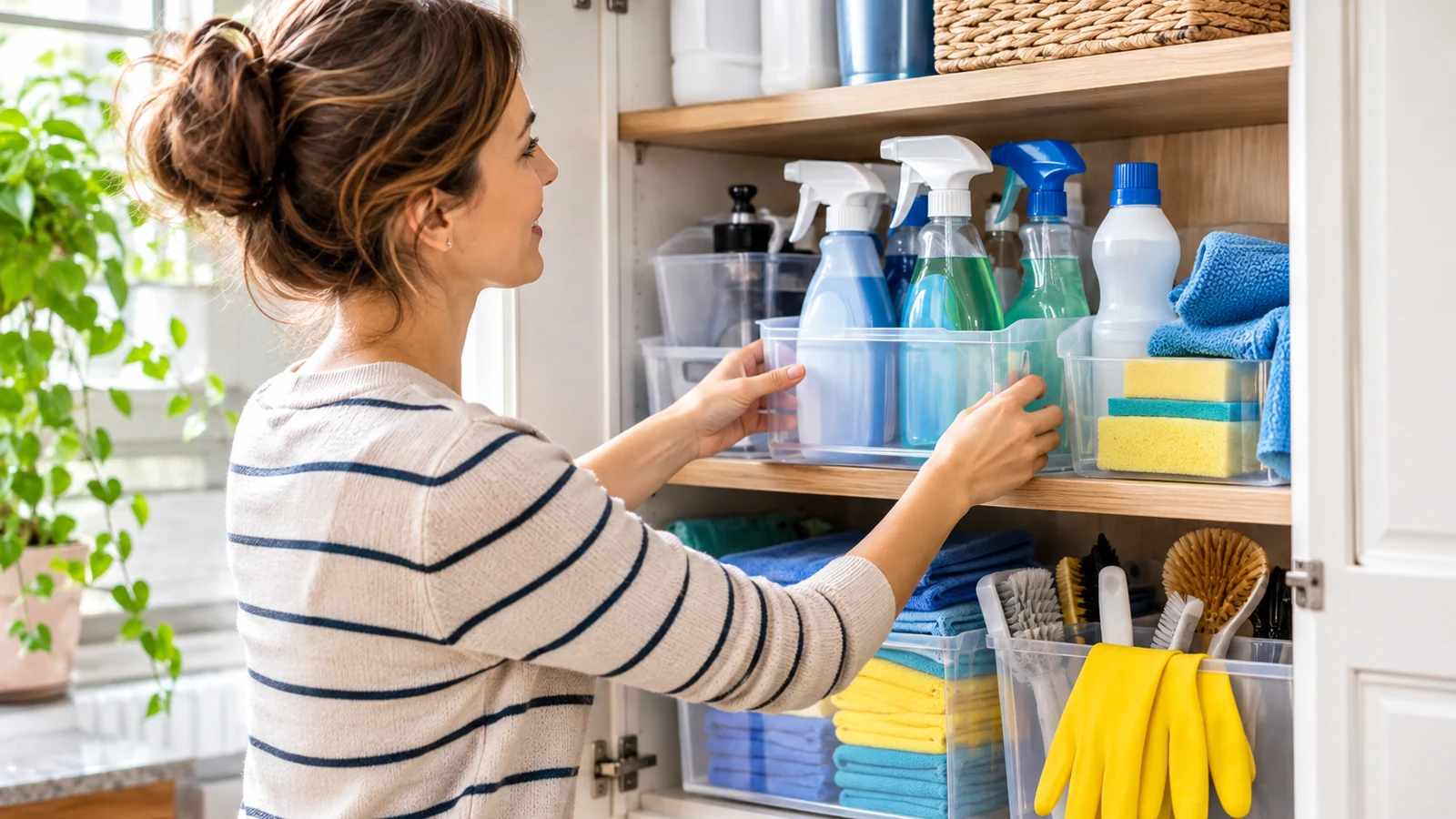
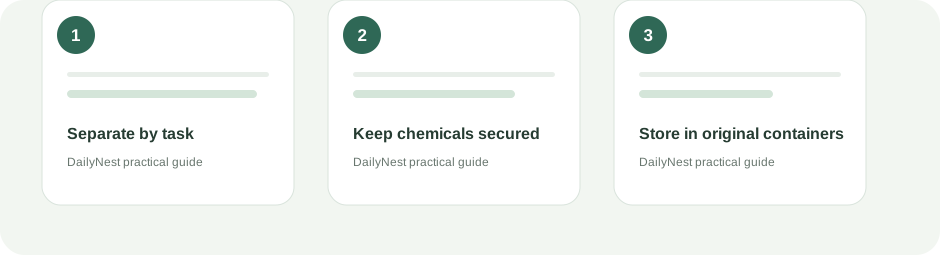
Make supplies easy to find while preventing accidental exposure or mixing. The best approach depends on the materials, products, and conditions in your home. Start with the instructions for the specific item you are working with and make a small compatibility check before proceeding.
Step-by-step approach
- Inventory products and read labels
- Keep products in original containers
- Separate incompatible chemicals
- Choose a cool secure storage area
- Dispose of unwanted products under local rules
A cleaning cupboard should be organized around safe storage.
Keep products in original labeled containers, upright with caps closed.
Read storage and first-aid instructions, and separate products that should never be mixed.
Store chemicals away from food, medicines, heat sources, children, and pets.
Keep cloths and brushes separate from chemical containers and let reusable tools dry before storage.
Never mix bleach with ammonia, acids, or other cleaners. Do not transfer cleaners into drink bottles. Follow local hazardous-waste disposal rules.
Separate products by task and read every label
Group products by the surface or job they are intended for, but keep incompatible chemicals physically separate. Retain original labelled containers so ingredients, first-aid instructions, and warnings remain available. Store products upright in a cool, dry place, away from children and pets.
Troubleshooting and common mistakes
Keep measuring caps with their own bottles and never transfer chemicals into drink or food containers. Use products only for labelled surfaces and follow dilution, ventilation, glove, and contact-time directions. Dispose of unwanted chemicals through local household hazardous-waste guidance rather than pouring unknown mixtures down a drain.
When to stop and get help
Never mix cleaning products. In particular, bleach must not be mixed with ammonia, acids, or other cleaners. If a product has leaked, fumes are present, or someone has been exposed, follow the label emergency directions and contact local poison-control or emergency services.
Sources and further reading
Biological Contaminants and Indoor Air Quality (official guidance)
Make emergency information visible
Keep product labels readable and do not combine leftovers from different bottles. If a product is transferred only where the label permits, preserve the original instructions and warnings. Store emergency contact information according to your local poison-control and emergency-service arrangements.
Frequently asked question
Can I combine the last amounts from two cleaning bottles?
No. Do not combine products, even if they appear similar or have the same intended use. Different ingredients can react, and mixing also removes important label and batch information. Keep products in their original labelled containers.
Editorial note: This is general household information. Product instructions and official safety guidance take priority where they differ.