How to Store Seasonal Clothes Between Seasons
Clean, dry, and pack garments according to fabric and storage conditions.

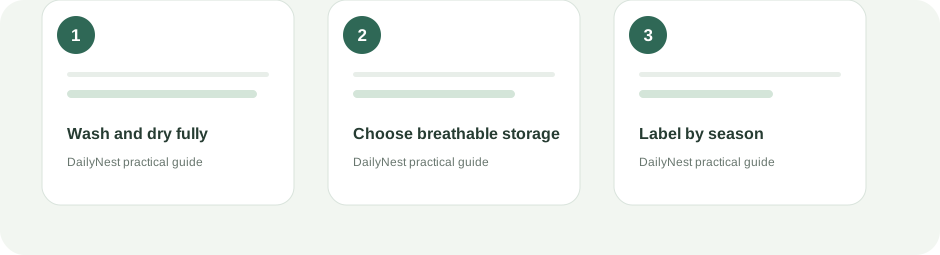
Clean, dry, and pack garments according to fabric and storage conditions. The best approach depends on the materials, products, and conditions in your home. Start with the instructions for the specific item you are working with and make a small compatibility check before proceeding.
Step-by-step approach
- Wash or clean according to care labels
- Repair and dry items completely
- Choose suitable breathable or sealed storage
- Protect from moisture and pests
- Label containers clearly
Clothes stored with body oils, food stains, or dampness may develop odors or attract pests.
Clean items according to care labels and repair loose buttons before packing.
Fold heavy knitwear rather than hanging it if hanging may stretch it.
Use breathable garment bags where appropriate and keep storage boxes away from damp floors and direct sunlight.
Do not store damp clothing. Use pest-control products only as labeled and legally permitted. Check storage areas for leaks and pests.
Clean, dry, and inspect before packing
Launder or dry-clean garments according to their care labels and make sure they are completely dry. Repair loose buttons or small tears before storage. Empty pockets and check seams for crumbs or other debris that could attract pests.
Troubleshooting and common mistakes
Choose a storage container based on the fabric and storage environment. Breathable garment bags may suit some natural fibres, while clean sealed containers can help protect items from dust and pests in a dry location. Avoid compressing delicate structured garments for long periods. Label boxes by season and contents, and store them away from direct sunlight, damp floors, and heat sources.
When to stop and get help
Do not pack away damp clothing or place containers in a basement or attic with known moisture problems. Check stored items periodically, especially after leaks, humid weather, or pest activity.
Choose storage for the room, not just the garment
A container suitable for a dry bedroom closet may not suit a humid basement or hot attic. Consider temperature swings, moisture, pests, and how often you need access. If the storage area has a history of dampness, choose a different location before packing valuable clothing.
Frequently asked question
Are vacuum storage bags suitable for every garment?
No. Compression can crease or stress structured, delicate, or naturally bulky garments. Check garment-care advice and storage conditions before compressing valuable items. Use breathable storage where the fabric or maker recommends it.
Editorial note: This is general household information. Product instructions and official safety guidance take priority where they differ.