How to Store Leftovers More Safely at Home
Use shallow containers, clear labels, and reliable temperature control.
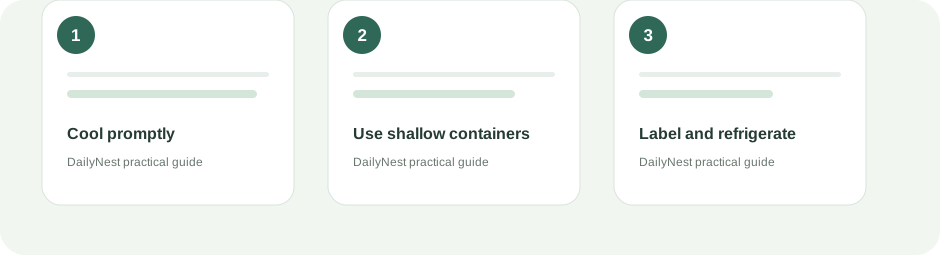
Use shallow containers, clear labels, and reliable temperature control. The best approach depends on the materials, products, and conditions in your home. Start with the instructions for the specific item you are working with and make a small compatibility check before proceeding.
Step-by-step approach
- Divide large portions into smaller containers
- Refrigerate or freeze promptly under local guidance
- Label containers with food and date
- Separate raw foods from ready-to-eat items
- Reheat according to official guidance
Safe leftover storage depends on cooling, packaging, and refrigerator temperature.
Divide large portions into shallow containers so they cool more quickly, then refrigerate or freeze promptly according to official local food-safety guidance.
Label containers with the food name and date.
Keep raw meat and seafood sealed below ready-to-eat foods, and reheat only the portion you plan to eat.
Cool and portion food promptly
Divide large amounts into shallow containers so they cool more quickly. Refrigerate perishable leftovers promptly; USDA guidance says within two hours, or within one hour when the surrounding temperature is above 90°F (32°C). Keep the refrigerator at 40°F (4°C) or below and label containers with the date.
Troubleshooting and common mistakes
Use refrigerated leftovers within the official recommended storage window for that food. USDA guidance commonly gives three to four days for many cooked leftovers. Reheat leftovers thoroughly and use a food thermometer where appropriate. Freeze portions you will not use within the safe refrigerated period.
When to stop and get help
Do not leave a large pot on the counter until it reaches room temperature. Do not taste food to decide whether it is safe. If food has been left out too long or its storage history is uncertain, discard it.
Sources and further reading
How do I handle leftovers safely? (official guidance)
Label the container, not your memory
Write the food name and preparation date on the container before it goes into the refrigerator. Divide large batches into meal-sized portions so you only reheat what you intend to eat. Follow the storage period for the specific food rather than assuming every leftover lasts the same number of days.
Frequently asked question
How long can cooked leftovers stay in the refrigerator?
It depends on the food. USDA guidance says many cooked leftovers should be used within three to four days when promptly refrigerated at 40°F (4°C) or below. Check official guidance for the specific food and discard items left out too long.
Editorial note: This is general household information. Product instructions and official safety guidance take priority where they differ.